Excerpt from Female STEM Pioneers Who Survived the Holocaust by Victoria Van Orden Martínez (Pen & Sword History, 2026), launching September 28, 2026.
“As had been true for the Loebs in Westerbork, medical professionals were valuable prisoners in Theresienstadt and, in turn, medical work provided prisoners with some protection from the transports. The health system in Theresienstadt was extensive, and included a main hospital, auxiliary hospitals, a children’s hospital, an infirmary, and an elderly care home.16 Almost every medical specialisation was represented, including gynaecology, urology, dermatology, cardiology, infectious disease and psychiatric wards, and dozens of outpatient clinics.17 All of this was necessary not because the Nazis wanted to save the lives of the sick and dying prisoners but because, as with the Warsaw Ghetto, they were afraid of the spread of disease for their own sakes.18 Prisoner physicians, nurses, and other medical personnel were vital for handling hygiene issues like lice infestations, outbreaks of infectious diseases such as typhoid, tuberculosis, and scarlet fever, not to mention health issues related to age (both old and young), poor sanitation, and starvation. They were also expected to make their patients healthy enough for transport to the extermination camps.
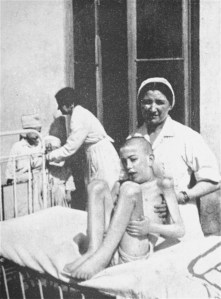
“In mid-1942, when the Theresienstadt health services were at their peak, there were 563 physicians and 1,583 nurses. But this was not enough to treat the number of sick and dying prisoners, nor were the facilities and supplies anywhere near sufficient. ‘In the central hospital and various clinics, there were shortages of physicians, nurses, caregivers, and nursing assistants, and of medical devices and basic medical equipment such as bandages, sheets, towels, basins, urine containers, and so on,’ writes Holocaust historian Margalit Shlain. ‘Everything was filled with dirt and feces.’19 Ruth [Pick] discovered the latter soon after her arrival, when she was assigned to clean the infirmary. While scrubbing the floor, she realised it was covered in fleas. Shocked and disgusted, she was told by other prisoners who had been in the ghetto longer that the solution was to not clean so well.20
“Ruth’s anecdote reveals another fact of life about being a medical professional in the Theresienstadt Ghetto. According to historian Anna Hájková, ‘women doctors were one of the groups who found it difficult to work in their profession in the ghetto.’21 Although Ruth was a qualified physician, she had to start from the bottom and work her way up. After cleaning the infirmary, she was assigned to distribute clean laundry to the barracks. Eventually, she was fortunate to be given work as a physician. Her first medical job was as a doctor in one of the barracks, where she treated elderly German women suffering from nutritional oedema – severe swelling caused by malnutrition – without access to most medications. Later, she was assigned to treat tuberculosis patients, all of whom died because of the lack of necessary medical supplies.”22
16 Erich Springer, ‘Health Conditions in Terezín’, in Terezín, Prague: The Council of
Jewish Communities in the Czech Lands, 1965, p. 199.
17 Margalit Shlain, ‘Nursing in the Theresienstadt Ghetto’, NASHIM 36 (2020): 60–85,
p. 64.
18 Anna Hájková, ‘Medicine in Theresienstadt’, Social History of Medicine 33, 1 (2018):
79–105, pp. 79–80.
19 Shlain, ‘Nursing in the Theresienstadt Ghetto’, p. 65.
20 Pick, USC interview, tape 2.
21 Hájková, ‘Medicine in Theresienstadt’, p. 100.
22 Pick, USC interview, tape 2.
Excerpted from Chapter 3, “The Final Solution,” pp. 62-63
Female STEM Pioneers Who Survived the Holocaust will be available in Europe late September 2026 and in North America late November 2026, and can be pre-ordered directly through the Pen & Sword website or on Amazon and other retailers.

