Excerpt from Female STEM Pioneers Who Survived the Holocaust by Victoria Van Orden Martínez (Pen & Sword History, 2026), launching September 2026.
“Women often think in parallel paths and can do several things at the same time. Whether it is innate or socially acquired, I do not know. A good researcher can connect seemingly unrelated things. Women have excellent qualifications for that.” – Halina Neujahr, D.Tech, 19931
“The tendency to mythologise important and significant people in history has a reductive effect. Complicated lives are reduced to simple heroic narratives. Rarely can more than one aspect of a person’s life fit into these reduced narratives. Nuance that humanises historical people is all but erased. Because heroes become less special when there are too many of them, heroic narratives also tend to perpetuate the idea that these individuals are unique and special rather than normal people who became notable. The result is that a handful of historical people can become representative examples of people in a particular context at the expense of many equally significant others. This book started out with these circumstances in mind, particularly the notion that women Holocaust survivors who were also STEM pioneers have rarely been recognised as both at the same time, and that their gender and the associated expectations of marriage and motherhood have further complicated how these women’s Holocaust experiences, lives, and careers have been contextualised. Rita Levi-Montalcini at first appears as an exception – a woman recognised as both a Holocaust survivor and STEM pioneer whose unmarried and childless status in life has not appeared to be an issue. This appearance does not stand up to scrutiny, however. Although she has become in many ways a representative of both women in science and the Holocaust (thanks in no small part to her own autobiographical efforts), the two are often portrayed as two parts of a half rather than as elements of an integrated whole (even though she portrayed herself very much in the spirit of the latter). Moreover, the element of gender is at once obvious and obscured in how she has been portrayed by others.
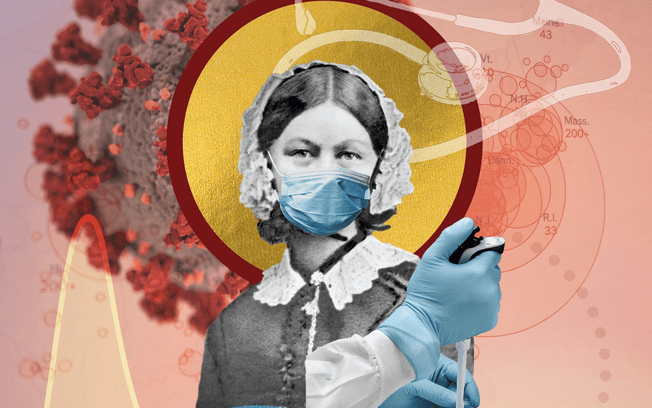
“In the same spirit as Halina Neujahr’s above quote, it is important to acknowledge that women – no differently than men – are and can do many things at the same time, and these aspects of their identity and experience not only relate to one another but also overlap. Which begs the question: what were the women in this book and others like them? While it would be easy to place them in simple categories like ‘feminist trailblazers’ and ‘Holocaust heroines’, the complicated answers to the question are more interesting than summarising them in these terms, not least because once they survived the Holocaust and entered their careers in STEM, they were little different than any other woman working in these professions. Yet, at the same time, what distinguished them was their unconventional experience and ‘training’ during the Second World War and the Holocaust. This, combined with their gender, religion, and foreign backgrounds, created a complex combination of advantages and disadvantages in their lives and careers. To understand these women, it is therefore necessary to understand how they viewed themselves in terms of the social, political, and professional norms of the time, and where their careers and accomplishments fit in the context of the history of women in STEM. Did they view themselves as feminists? STEM pioneers? Were they conscious of how their experiences during the Second World War and the Holocaust impacted their careers?”
1 Quoted in Rydberg, ‘Forskare mot all odds’, op cit., p. 9. Translated from Swedish.
Excerpted from Chapter 6, “Feminist Trailblazers? Holocaust Heroines?,” pp. 140-41
Female STEM Pioneers Who Survived the Holocaust will beavailable in Europe late September 2026 and in North America late November 2026, and can be pre-ordered directly through the Pen & Sword website or on Amazon and other retailers.

